Have any questions?


September 29, 2026
DevelopmentLooking back at decades of work in theurban innovation space, I have engaged with many cities, communities and theirleadership. One thing I discovered is that, no matter how much communities maydiffer in terms of culture, socio-economic conditions or political systems,when it comes to what we wish or hope our communities to be, we are allremarkably similar. Cities that are liveable. Equitable. Sustainable. Social. Ifclimate allows, even walkable. On the destination we roughly agree. On how toget there, we are much less sure. And the ground under our cities is movingfaster than we can plan for.
Take a step back. Following years ofdigitalization, our cities are increasingly experienced and expressed in threedimensions: the built environment, the socio-economic and the digital, withthese dimensions influencing each other in equal measure. The transformation we are looking at representsnothing less than a paradigm shift that slowly pulled those three together. Ithelps to be precise about language here. I used the word Digitalization. Digitization is translating somethingfrom an analogue format into a digital one. Digitalizationgoes much further. It reaches into the core processes and fabric of our organizationsand of social and economic life, complete with new services, new values, and newtypes of jobs.
This paradigm shift has not yet beencompleted, and we are still collectively processing the past decade oftransformation it triggered. But there is no time to pause: AI, together withthe digital technologies around it, is a fresh paradigm shift in its own right.It is producing a radical system shift on top of the previous one. It unsettleshow our institutions work, redefines what we mean by human value, and bringsnew rules, norms and values with it. It reframes value itself.
So the question for everyone who designs, builds,governs, finances or lives in cities is this: how do we prepare for, anddeliberately shape, a good urbantransformation, one in which the analogue and the digital have converged in ourcities, communities, neighborhoods and campuses in ways we consider humancentric, desirable, ethical and in every sense of the word, sustainable?
Getting this system shift right requiresholding firm to ten commitments. I offer them not as a checklist but as ashared agenda.
First: Call it what it is. A system shift. When you areliving through a system shift, the lessons of the past become a much weakerguide to the future, and a poor tool for managing the transition. The playbookswe inherited were written for a different world. That is uncomfortable. It isalso freeing. It means we have to think again, and together.
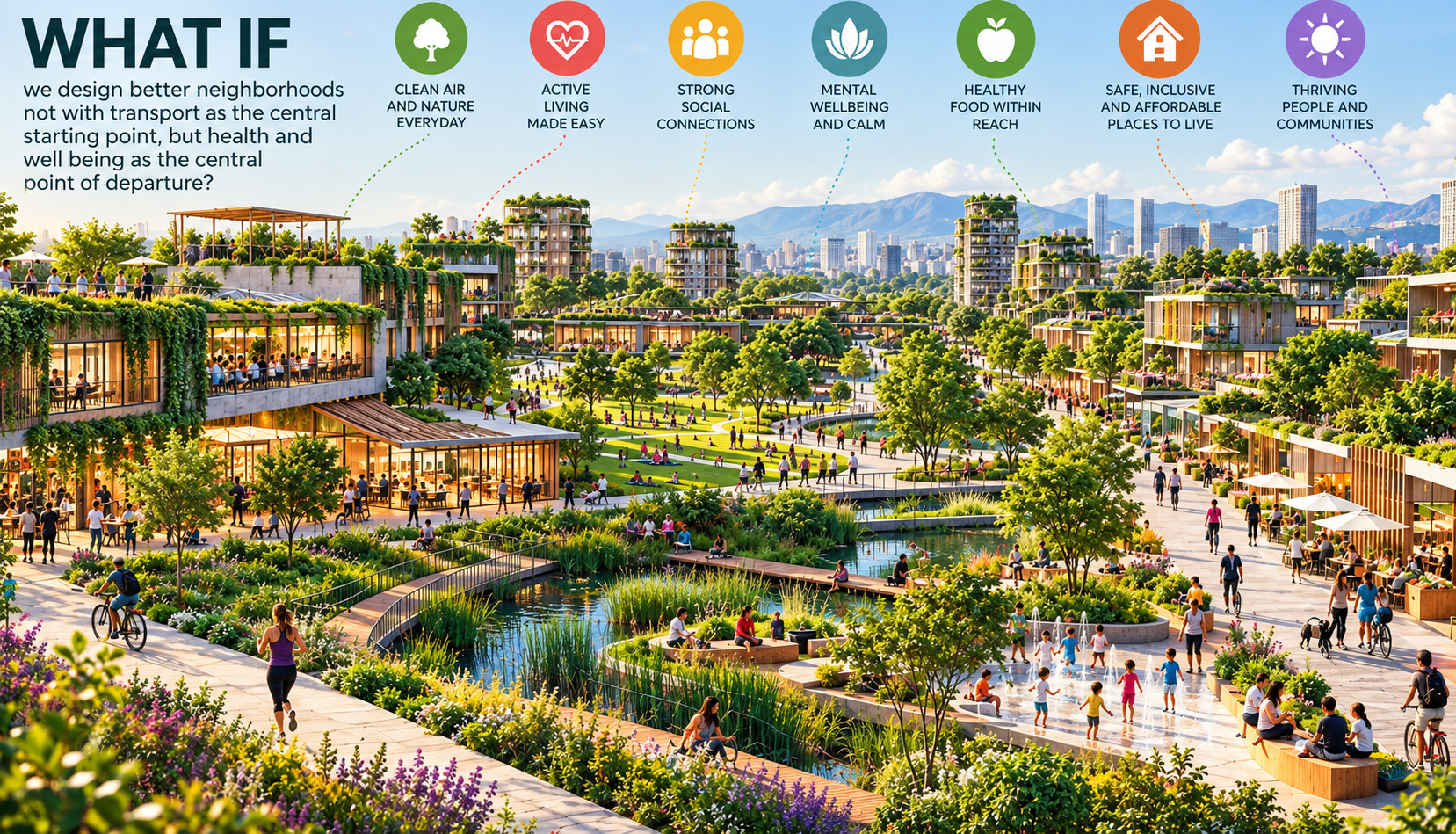
Second: Frame purpose, and design for it. In 1939, at theNew York World's Fair, General Motors showed the world its vision of the cityof tomorrow, organized around the car. Much of it got built. We are stillliving with the results. The lesson is not to copy the designs of the past.State your purpose, your moonshot and your executable goals upfront. Dare tohave moonshots. Design your innovation journey around them. Talk to yourstakeholders and your citizens. And move from spatial planning to neighborhood andcity design. The Moonshot may entail a very different starting point for urbandesign than the ones of the past century that mainly focused on cars andmobility. Health, wellbeing, resilience – you choose. In doing so we are alsocreating new types of jobs and new types of leadership: I am thinking of, amongothers, the rise of the City Designer. Spatial planners, architects,master planners, technologists and design thinkers now too often work inisolation. The City Designer brings their crafts together – not just asmultidisciplinary exercise, but as an interdisciplinary one. And thatmay require entire teams going back to school (see commitment number eight)
And before any of it: start with diagnosis,not with solutions. Every city needs to know where it truly stands. That meansits real capacity for leadership, governance, skills, data, engagement,security and delivery, not its place in the rankings.
Third: Invest in invisible infrastructures before visible ones. A new platform without data governance is immobilized capital. Afunded project without an operating model is an unrecognized future cost.Digitalization without human competences is the automation of chaos. Commencewith people. Go where they are. Citizen engagement does not equal assessmentsor research focusing on a neighborhood or community. Engagement must be realengagement. Understand the physical, social and digital needs, expectationsand desires in the city, community, neighborhood before you start anythingelse.
Fourth: Build a shared language. Shared definitions, sharedvalues, shared purpose. Too many conversations about urban innovation soundlike someone ordering in a restaurant: “two UN Sustainable DevelopmentGoals, please, some open data on ice, and a side of MIMs and BIMs,” fullyincomprehensible to the waiter in charge. Jargon is not strategy. And be honestwith the people you engage. Design thinking and citizen engagement only work ifyou are prepared to act on what you harvest. Competence generates trust. Emptyparticipation destroys it.
Fifth: Avoid innovation in isolation. Drive convergence.Public sector meets private sector meets citizens. Digital meets analogue.Digital meets digital: AI, the Internet of Things, digital twinning andextended reality working as one. Two examples from the country where I wasborn, the Netherlands: In Amsterdam, an AI-powered digital twin now models mobilityscenarios and gives insight into urban complexity in six minutes instead of sixmonths of research. That is not a gadget. Rotterdam’s Open Urban Platformallows for a game-engine-powered walk-through of streets and individual houses,observing them in varying scenarios of flooding. It allows not only for anexchange between specialists; it also triggers a conversation with citizens,homeowners, stakeholders in the neighborhood. This is not a gadget either. Suchtools change how quickly a city can think, respond, anticipate and, if needed,build back better.
Sixth: Steer convergence with a data governance strategy that reflects your values. In the world of urban data, two models dominate. In one, privateplatforms own the digital infrastructure. In the other, government does.Rotterdam, (as do many other European cities) chose a third path, an open urbanplatform in which interoperability is king, and carried that choice all the waythrough design, development and management into its data strategy. The point isnot that every city should copy Rotterdam. The point is that every city shouldchoose its model consciously. Otherwise someone else will choose for it.
Seventh: Practice foresight. Scenario thinking, reverseengineering, moonshot thinking, design thinking. Imagine positive and negativefutures for your communities five to ten years out. Then try this exercise.Imagine the hack of the century hits your city or region tomorrow. What wouldyou do? More importantly, since you know it will very likely happen one day,what should you be doing now to prepare, prevent or mitigate?
Eighth: Educate. Your organizations, your teams, yourself.Move from single-disciplinary to multi-disciplinary to truly interdisciplinary.Data analytics for the public sector. Design thinking for the public sector. AIfor the public sector. Procurement for innovation. Ecosystem management. Leadershipin innovation. Effective citizen engagement. The history and future of urbaninnovation. In Oman, Thunderbird School of Global Management designed anddelivered a multi-year executive education program for the Sultanate’sgovernment. The Ministry of Housing and Urban Planning and its partnerscommitted to it: urban innovation and next-generation spatial planning, threecohorts in four years, mostly on site, enriched by learning missions to othercities across the world. That is what serious capacity building looks like. Itis structured, sustained and tied to real goals.
Ninth: Measure success in terms of well-being, not technology adoption. The number of sensors installed or apps launched tells us nothingabout whether life has improved for the people who live in our neighborhoods orcities. Well-being, meaning the concrete quality of life of residents, is thefinal measure of every public investment. In social housing, for instance, thatis not an abstraction. It is the whole point. And that’s what is in the eyes ofthe novel City Designer for the city at large.
Tenth,and perhaps most urgent: Lead across generations.Bring the younger generation into decision-making now. Not intoworkshops. Not into mentoring sessions where they watch leaders at work. Intoreal boardrooms. Onto sites where things happen. Into the rooms where decisionsare actually made. The young will inherit our cities, our digitalinfrastructure and our choices. They will live by them, prosper by them, orsuffer from them. The pace of transformation means we no longer have the luxuryof the traditional handover from one generation to the next. We mustdeliberately bring older and younger generations together in leadership, andbuild, together, a green, digital and equitable deal for our cities.
The future will not wait for us to beready. But it can be shaped, if we agree on the agenda.
Bas Boorsma
Professor of Practice, Thunderbird Schoolof Global Management at Arizona State University, Urban Innovation
Co-Chair of the United Nations’ United forSmart Connected Communities (U4SSC) Working Group on Digital Development Goalsfor Cities
Founder & Partner, Urban InnovatorsGlobal
Senior Advisor and Former CDO to the Cityof Rotterdam
Former Digitalization Leader at Cisco
Author of "A New Digital Deal"


-min.jpg)